PR has always played a role in building brand awareness. But increasingly, there’s pressure to show how that awareness converts into measurable value for Fashion, Lifestyle and Beauty (FLB) brands. While generating buzz through reach and impressions still matters, it no longer tells the full story.
For many PR teams, this creates a familiar frustration. You secure that Vogue feature, land a viral TikTok moment or structure a flawless product launch, only to face the inevitable question: “But what was the actual impact?” Traditional metrics can leave you with impressive-sounding numbers, but they usually don’t translate into clear business outcomes.
To better understand which PR efforts actually performed, which messages landed with your target audience and which campaigns moved the needle, you need a more holistic way of analyzing and measuring through one unified metric.
The reality is that today’s leaders look to understand which PR moments drove consideration, influenced perception or contributed to business growth. However, the challenge lies in bridging the gap between PR activities and measurable outcomes that matter to the bottom line. What’s needed is a better way to connect visibility with impact and demonstrate the true PR value of your efforts—and that’s exactly what we’ll be exploring in this blog.
What Is PR Value?
PR value represents the quantifiable business impact that public relations efforts generate for a brand. It goes beyond basic coverage tracking to understand how media exposure translates into ROI. Rather than simply counting mentions or measuring reach, PR value assigns tangible worth to your media coverage across print, online and social channels.
The modern PR landscape spans traditional publications, digital platforms, brand partnerships and social media. With content amplification and consumption increasing across these channels, measuring PR value requires tracking the right mix of quantitative and qualitative metrics.
Quantitative metrics show frequency and reach, while qualitative metrics reveal the tone of coverage and presence of key messages.
Modern PR value measurement recognizes that not all coverage is created equal. For instance, a feature in Harper’s Bazaar carries different weight compared to coverage in a less targeted or “niche” publication. Similarly, articles that focuses solely on your brand generates greater impact than sharing the spotlight in roundup articles. These are some of the ways that indicate the quality and relevance of coverage plays a more significant role than volume alone.
The evolution toward more sophisticated measurement reflects the industry’s maturation. PR teams now have access to comprehensive media monitoring platforms that track coverage across multiple channels, analyze sentiment and provide standardized metrics for comparison. This allows brands to understand which PR moments actually drive brand equity and business outcomes.
How To Calculate PR Value
Calculating PR value requires a systematic approach that goes beyond basic coverage counting. Traditional PR metrics like reach and impressions provide starting points, but they don’t reveal the true business impact of your efforts.
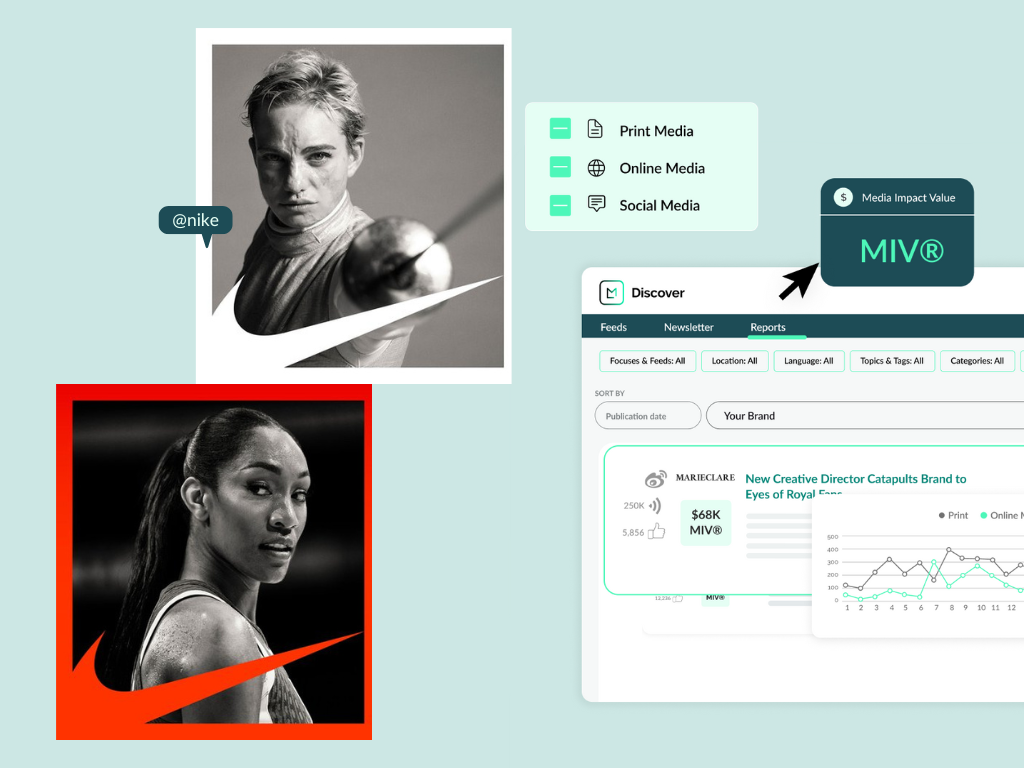
This is where Launchmetrics Discover comes in. As a comprehensive media monitoring platform, Discover helps brands move beyond coverage tracking by applying Media Impact Value® (MIV®), Launchmetric’s standardized metric that quantifies brand performance assigning a monetary value across Voices (Influencers, Celebrities, Media, Owned Media and Partners,) channels, and markets. Instead of asking “what coverage did we get,” the question becomes “what delivered?”

With this, PR ROI becomes measurable by assigning actual value to each piece of coverage, comparing performance across different channels and identifying which strategies generate the highest returns on your efforts.
PR Value in Action: 3 Campaign Examples
The following campaigns show how strategic PR execution across different industries can deliver quantifiable results, each activating different Voices and channel strategies to achieve their objectives.
Prada’s “Double Club” Installation During Oscars Week
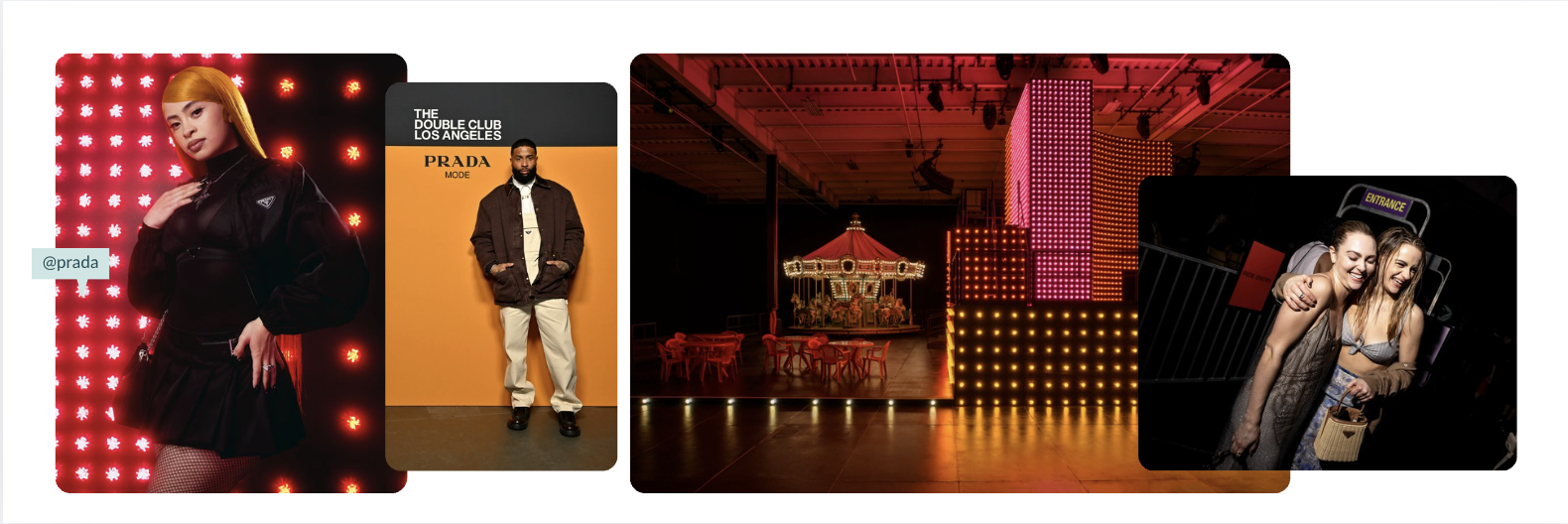
Prada’s “Double Club” was not a typical fashion week moment. Timed during Oscars weekend, the Italian house partnered with artist Carsten Höller to bring his immersive club installation to Los Angeles, merging fashion, contemporary art, nightlife and music into one maximalist space. Drake co-curated the performances, which included Travis Scott, Lil Wayne and Anderson .Paak, while the place itself—a brutalist space lit by hundreds of bulbs—was filled with carnival rides and art pieces that made reference to the Luna Luna exhibition just down the street.
But beyond the installation itself, Prada’s real success was in the way this cultural convergence translated into media value. The activation generated $1.3M in total MIV, with nearly half of that (49%) driven by Media. Influencers contributed 34% of the total Voice mix, while TikTok emerged as a key platform, accounting for 16% of total campaign value: a meaningful channel share given the experiential nature of the content. The highest-value day was March 7, the date of the private VIP preview. Notably, this spike in coverage came before the public opening, showing the power of scarcity and access in sparking media attention—therefore amplifying PR value significantly.
Notably, individual influencer posts significantly outperformed traditional media coverage. A single TikTok by influencer freya.loren generated $468K in MIV, while Romeo Beckham’s Instagram post delivered $249K—both exceeding the impact of coverage in prestigious publications like T: The NYTimes Style Magazine ($110K) and Madame Figaro ($97K). This demonstrates how the right influencer content can deliver higher PR value than traditional media placements.
The campaign succeeded because it created conditions for authentic, multi-disciplinary commentary rather than relying on traditional red-carpet visibility. From art publications to TikTok creators capturing behind-the-scenes content, Prada successfully extended its brand into new cultural spaces, resulting in organic attention that drove measurable impact through editorial and video-first platforms.
BYOMA’s “Your Skin Barrier Needs You” Campaign
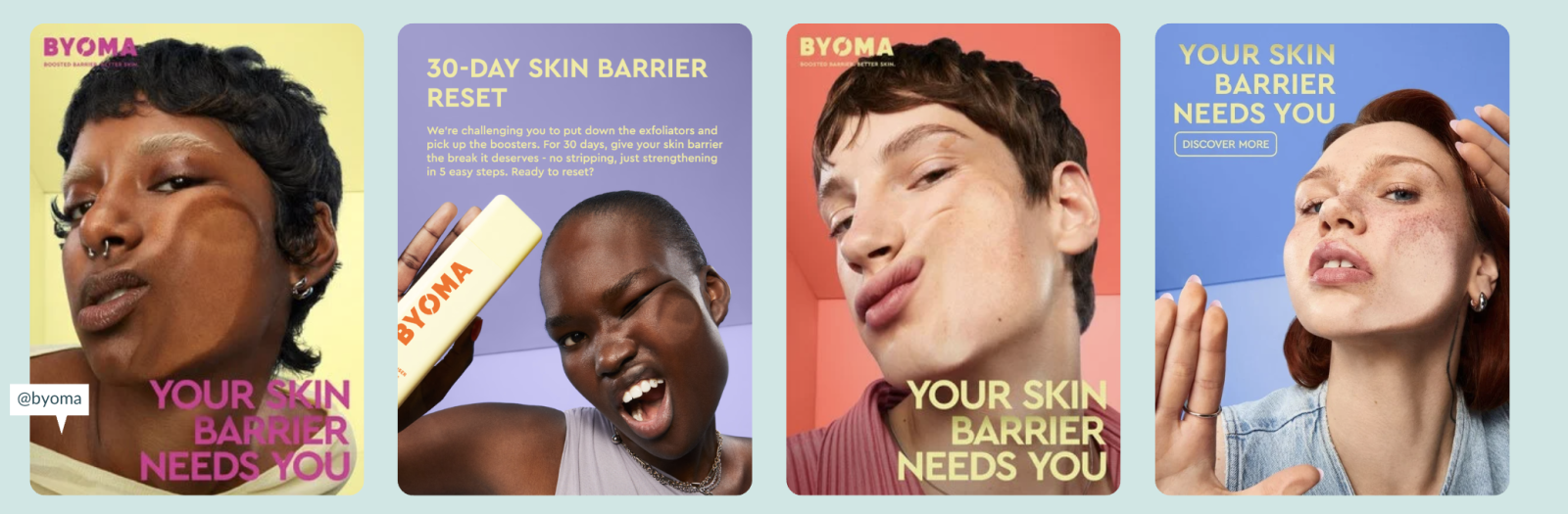
BYOMA launched the second edition of its “Your Skin Barrier Needs You” campaign in June 2025, an initiative tied to its self-declared Skin Barrier Awareness Month. The campaign focused on education and science over aesthetics alone. The tone was intentionally direct: challenging consumers to take a 30-day break from exfoliants and learn what “barrier health” really means.
The campaign delivered $1.33M in total MIV, with 56% of that coming from Influencers, 18% from Media and 17% from Owned content. TikTok drove nearly half of all value, followed by strong performance on Instagram and Owned platforms. The top markets were the US (47%) and UK (35%), aligned with BYOMA’s strongest retail presence.
Creators—mostly Gen Z—posted skincare routines and educational commentary using consistent brand language and incorporating the products into their daily life. Many began posting before the official campaign launch, generating early momentum and giving BYOMA space to shape the narrative. The brand also invested in long-term credibility, with every product undergoing at least two clinical trials and a dedicated testing lab at its Glasgow HQ to further underscore the scientific foundation of its products. By translating complex skincare science into accessible TikTok format,s while maintaining consistency and community-first messaging, the campaign balanced authenticity with authority—resulting in strong performances across all touchpoints.
Nike’s “Winning Isn’t for Everyone” Olympic Campaign
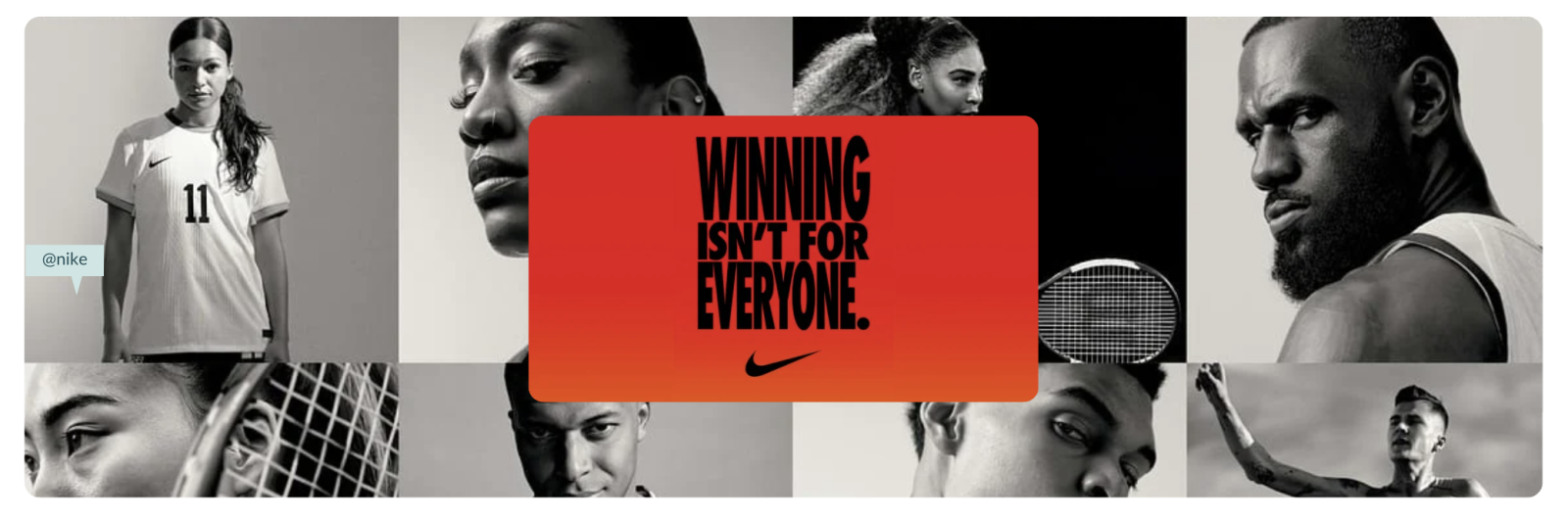
As the Paris Olympics approached, Nike released a campaign that took a sharp turn away from generic sports storytelling. Titled “Winning Isn’t for Everyone,” the brand’s long-form film leaned into the obsession, single-mindedness and ego often required to reach the top; voiced by Willem Dafoe and featuring athletes like LeBron James, Giannis Antetokounmpo and Sha’Carri Richardson. The campaign deliberately challenged conventional Olympic messaging by emphasizing the ruthless mentality behind elite performance, a stark contrast to the feel-good narratives typically associated with Olympic advertising.
Overall the campaign generated $15.6M in MIV. The US was the top market (33%), followed by strong visibility across China and Japan. The Media Voice accounted for 65% of total value, a clear indicator that the campaign succeeded in sparking editorial discourse. Instagram (23%), YouTube (21%) and Online (34%) combined for over 75% of total value, showing that long-form storytelling paired with visual-first distribution can amplify impact.
But the campaign’s success stemmed from conversation. Editorial outlets debated the tone, creators responded to the message and the quote-heavy out-of-home component (running across US and global cities) gave the campaign real-world stickiness. While Nike’s Owned media volume was relatively low, amplification came from the athletes themselves and the sports media ecosystem.
By choosing tension over inspiration, Nike earned both visibility and narrative control, proving that strategic friction can be a powerful driver of PR value when aligned with brand positioning and audience expectations.
Key Takeaways on Measuring PR Value
When a campaign goes live, the outcome often isn’t clear. PR teams move on to the next brief, and the full story behind performance goes untold. Without real performance insight, it’s easy to keep investing in tactics that don’t deliver or overlook the ones that did.
The most effective measurement strategies focus on understanding value rather than just tracking coverage. These include:
- Tracking coverage across all Channels and Voices: Monitor your brand presence across print, online and social media. With platforms like Discover, you can tag coverage by campaign, region or event to create organized feeds that give you clear visibility into performance patterns and trends.
- Applying standardized metrics for true comparison: Use consistent measurement metrics like MIV to assign monetary values to your coverage. This allows you to compare performance across different channels, campaigns and even time periods, moving beyond gut feelings to data-driven decisions.
- Measuring both quantity and quality: Reach and placement count matter for awareness, but having a holistic metric like MIV enables teams to understand the impact of the coverage as well: was your brand featured in a top-tier fashion outlet or a less relevant publication? Industry-specific sources consistently deliver higher business impact than broad reach but less relevant outlets.
- Focusing on performance optimization: Track your results monthly, seasonally and annually to identify performance shifts. Understanding which strategies consistently deliver the highest PR value enables you to optimize future campaigns and allocate resources more effectively.
Only through detailed campaign breakdowns across Voices, channels, regions and timing can PR teams see what actually performed and optimize future investments for maximum impact.

PR Reporting Survival Guide
Learn how to measure your PR efforts and build data-driven strategies to deliver real business impact.
Download our PR Reporting Survival Guide to learn more about measuring your PR efforts and building data-driven strategies that deliver real business impact.
By Luna Weissman