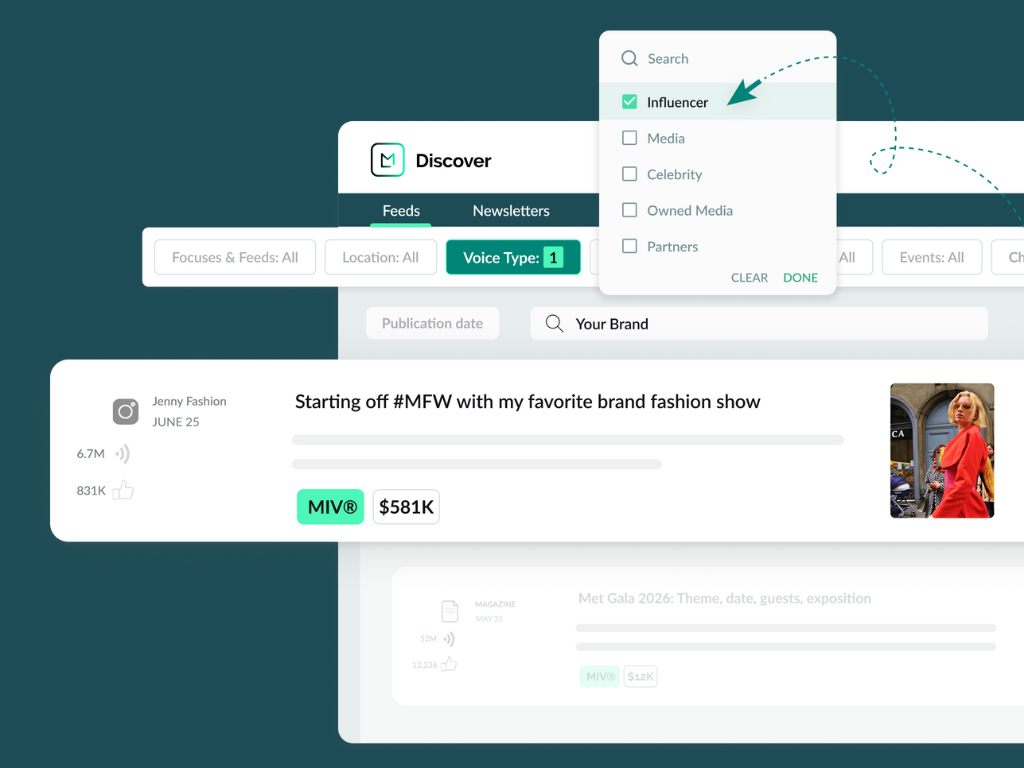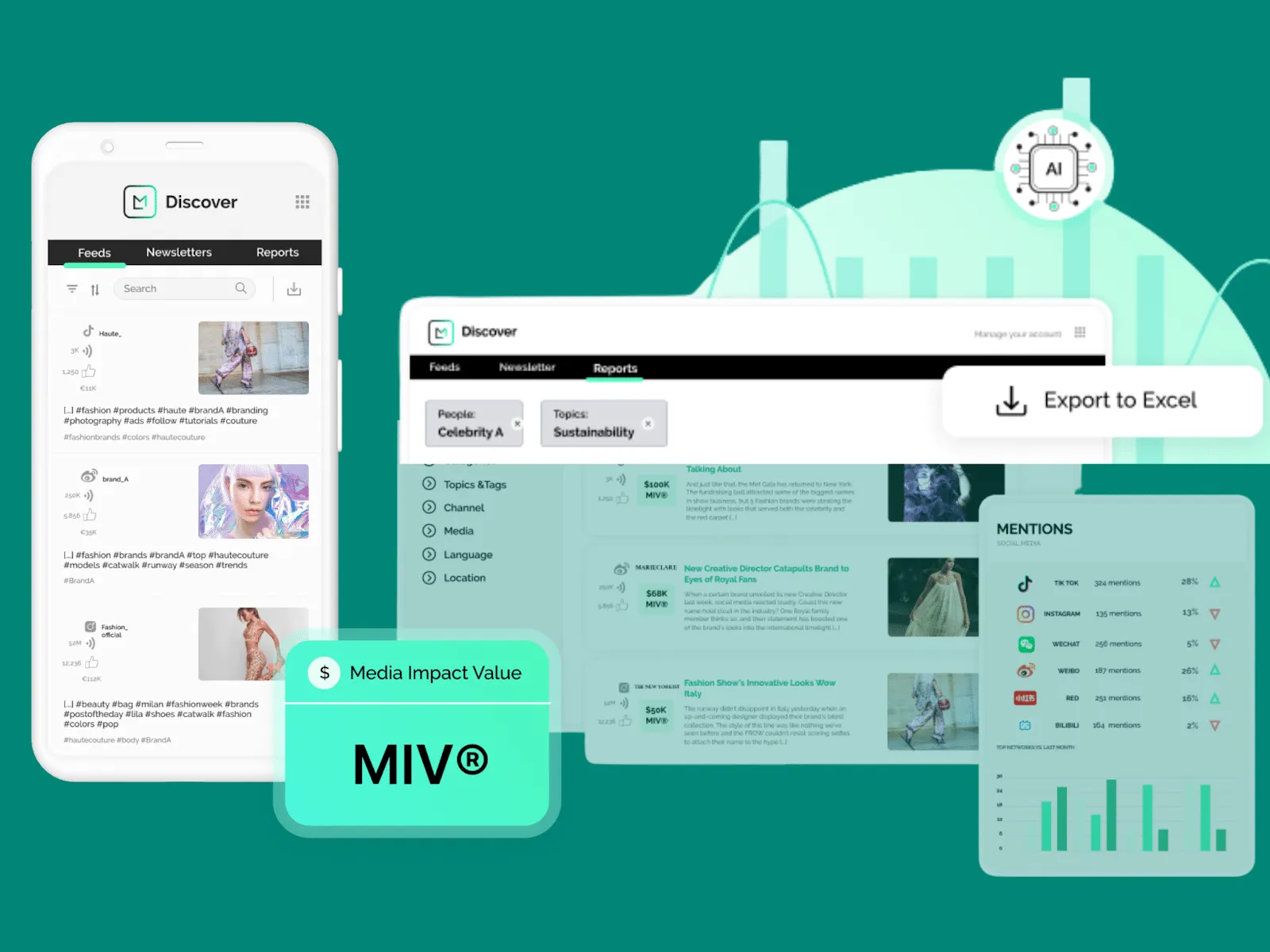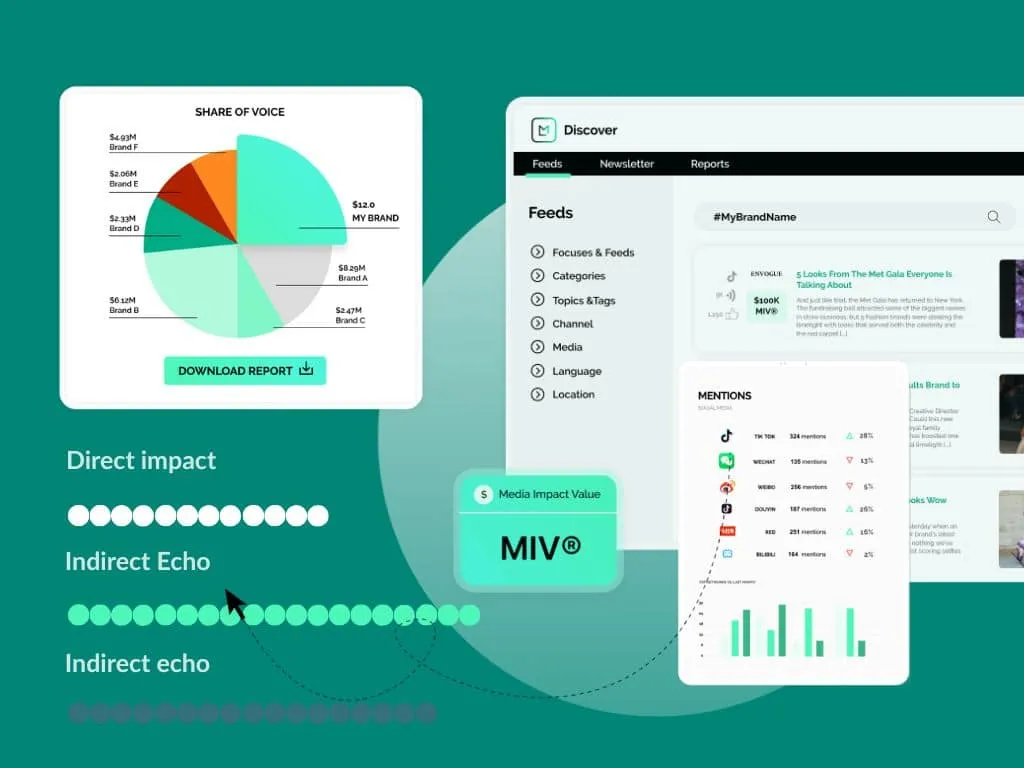
From red carpet appearances to social media buzz around a product launch, different Voices—such as Celebrities, Influencers, Media, Partners and Owned—all contribute to your brand’s performance. But understanding the true impact of each Voice isn’t always straightforward. A single mention can spark a ripple effect that’s often amplified by other outlets or platforms. This creates an “echo” of influence that extends far beyond the original source.
That’s where our Voice Echo Tagging feature becomes invaluable. It allows teams to define and track their own key Voices in a tailored way by applying tags across content that matters to them when capturing both direct and indirect media impact. This clear, customizable view of how each Voice generates Media Impact Value® (MIV®) for your brand, helps you to benchmark results, refine strategy and prove brand influence on your terms.
What Is Voice Echo Tagging?
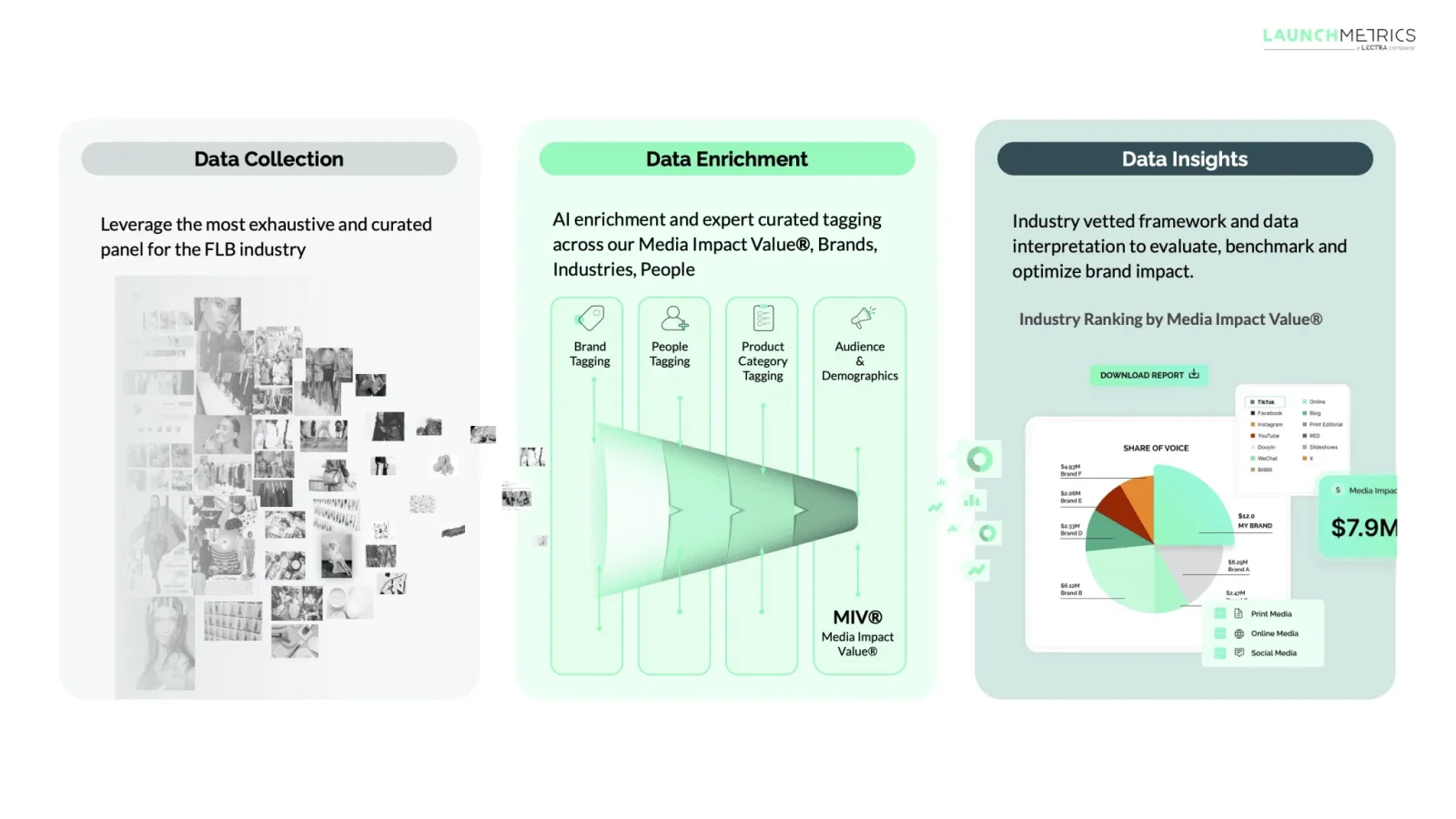
Voice Echo Tagging is a new capability within Launchmetrics Discover that gives teams the flexibility to track and report on the Voices that matter most to them—across media types, campaigns and moments. Built to reflect the way FLB brands work, it allows users to apply custom tags to coverage. This enables them to isolate and analyze the impact of specific talent, events or product stories.
Sitting within the broader Topics and Tags framework in Discover, it gives teams a faster, cleaner and more strategic way to organize and report on MIV. Whether you’re measuring the influence of a brand ambassador, a creative director or a key media partner, this feature helps you build a more tailored view of their contribution across print, online and social channels.
“With Voice Echo Tagging, we’re giving brands the power to tailor how they measure impact, from tracking a celebrity’s echo across channels to benchmarking performance over time. In a climate of tighter budgets, this kind of insight helps validate investment and pivot strategy when needed.”
–Krista Johnson, Launchmetrics Senior Brand Insights Manager
Why Voice Echo Tagging Matters
Every brand has its own definition of ROI and every campaign has its own storytelling needs. Voice Echo Tagging empowers teams to define, tag and track what matters most to them, in a way that’s completely tailored to their goals. Here’s how:
- Track the full “echo” of celebrity mentions: Capture direct and indirect media impact, including mentions in key campaigns.
- Smarter search with less setup: Use automated tagging to track specific names, products or events without creating separate feeds for every initiative.
- Save time and stay organized: Tags allow you to surface relevant insights without overloading your Discover setup with multiple, duplicate feeds.
This enables faster access to more relevant data, with reporting tailored to your brand’s needs.
How Voice Echo Tagging Works in Discover
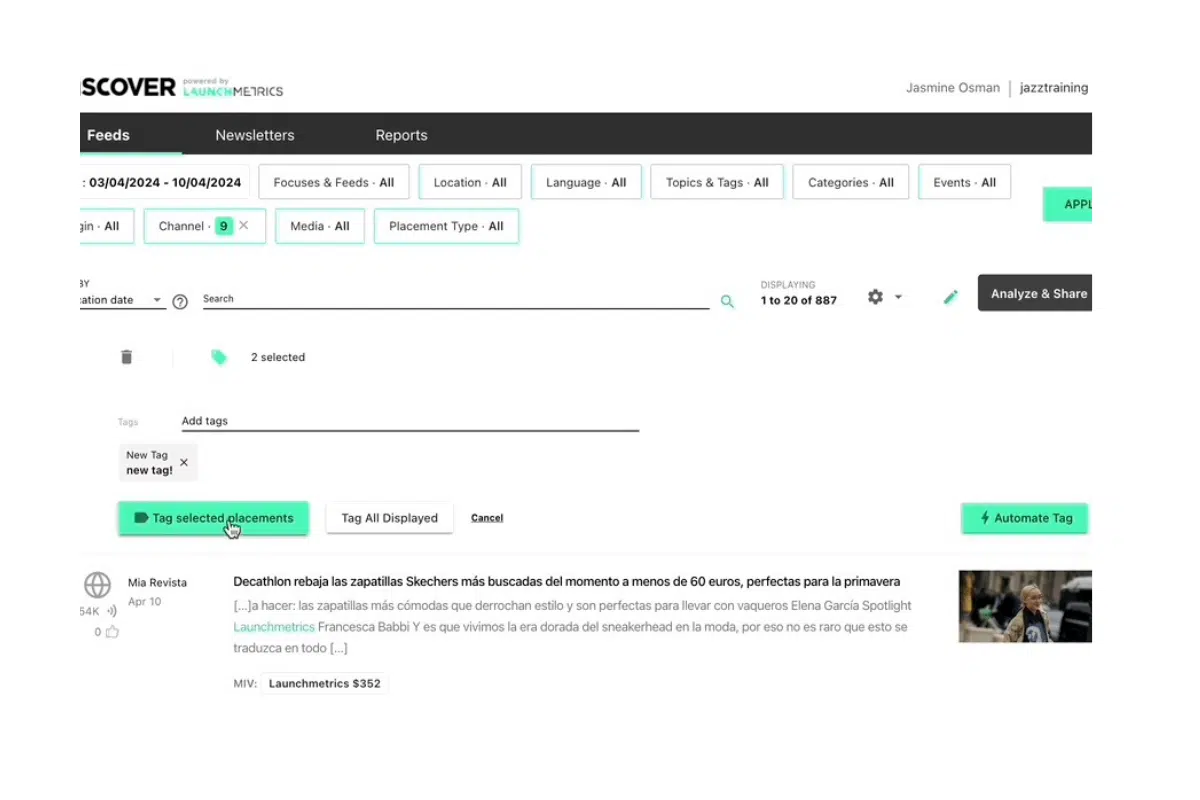
Voice Echo Tagging lets users create custom tags based on keywords, phrases or expressions, such as a celebrity’s name, a campaign hashtag or a product reference. From there, tags can be applied manually to individual results or automated to assign tags whenever new coverage matches your criteria.
Because tags work across your entire Discover site, there’s no need to create separate feeds for every topic or initiative. You can simply filter by tag to surface relevant mentions across all media types and channels, giving you a clean, cross-feed view without the clutter.
Here are a few ways Voice Echo Tagging can help you:
- Set up topics
(like events, talent and products) and define tags under each topic. - Use existing feeds or filters
to identify coverage mentioning key people or campaigns. - Tag placements
manually or in bulk directly from the feed. - Create automatic tags
that apply every time a defined expression is matched. - Temporarily enable or pause tags
ideal for tracking short-term events like fashion week or the met gala. - Filter reports by tag
to zoom in on celebrity impact, product visibility or event performance.
Use Cases
Discover tags live across the site, making them central to smarter, cleaner and more scalable reporting workflows. Below are some noteworthy examples of how different teams can use Voice Echo Tagging to unlock valuable insights tailored to them.
1. Celebrity benchmarking for PR
A PR director is managing the launch of a new global brand ambassador. After coordinating appearances, media exclusives and influencer amplification, they need to measure the ambassador’s total impact across all touchpoints. Using Voice Echo Tagging, they set up a custom tag that captures coverage where the ambassador and brand appear together. After applying the relevant filters, they enable the system to apply this tag automatically to relevant content across print, online and social. This helps the team to create a ready-to-pull benchmark report whenever they need to share results with leadership.
2. Product performance for marketing teams
A senior product marketing manager wants to track the direct and indirect impact surrounding one of the brand’s most iconic products. Instead of creating separate feeds, they set up an automated tag for key terms like “[Product Name] Bag” and “[Brand] Bag.” With Voice Echo Tagging in place, the team can easily surface the product’s total earned coverage and compare its performance across regions, campaigns or time periods.
3. Event ROI for communications leads
Ahead of a major industry event like the Met Gala, a global communications team prepares to measure brand presence tied to this key moment. They create an auto-tag under the “Events” topic using expressions like “Met Gala” to capture all associated coverage. Once the event unfolds, they use Discover to filter and analyze brand mentions by tag—making it easy to assess which Voices and placements delivered the strongest ROI across different media types. Once the event is over, they can pause their coverage tracking until the next Met Gala event in the following year.
See It In Action
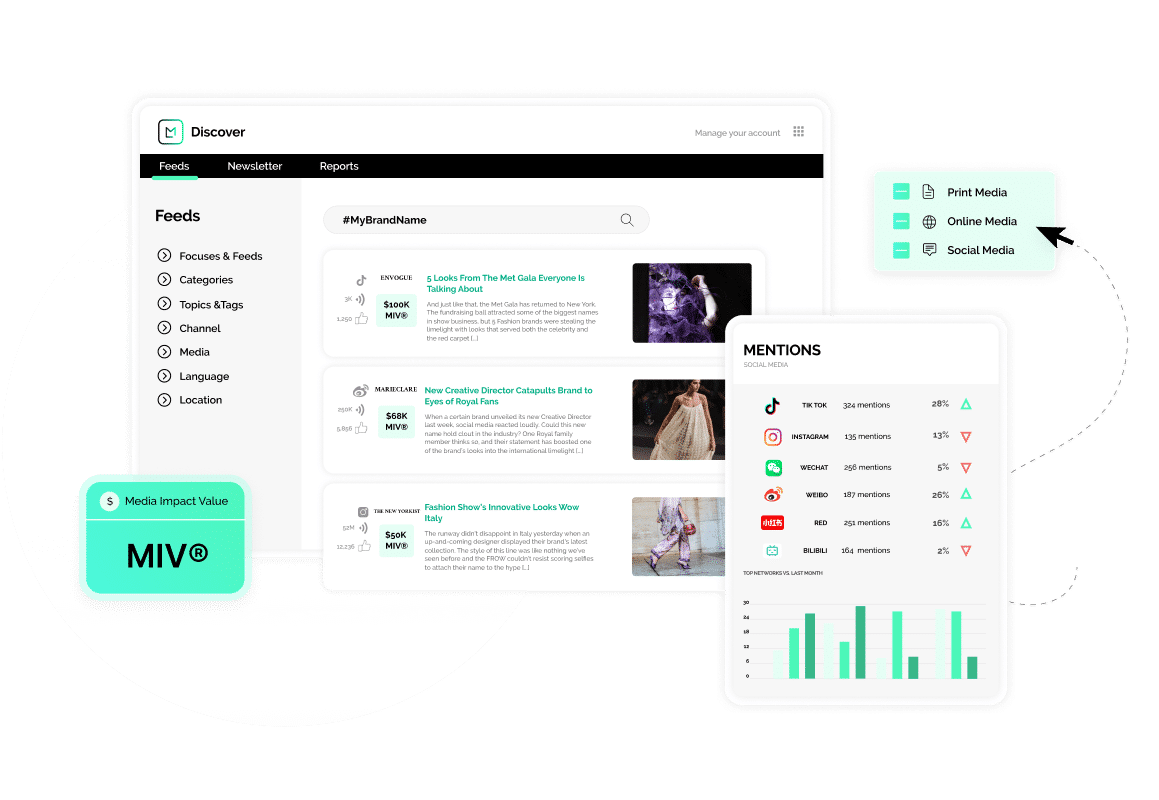
Go Beyond Measuring Basic Mentions
Book a personalized demo to see how Voice Echo Tagging can help you track what matters most with speed, clarity and confidence.
By Pawandeep Kaur