Today, social media continues to push video formats to keep users on-platform, resulting in social media reach being a priority KPI. For instance, Instagram Reels see around 36% more reach than other formats. At face value, this appears to be strong performance, but in reality, it doesn’t quite paint the full picture on the quality of content and quality of audience
For marketing and PR teams, reach shows how far a moment travelled, but the real value rarely sits in that first burst. Instead, it shows up in what happens next: when the media picks it up, when other creators reference it or when the moment builds momentum on its own. That “Indirect Echo” is often where impact compounds and ROI is apparent—something that reach can’t tell you on its own.
This is why more brands are turning to other metrics that show the full chain of influence, not just the first surface-level impact. In this blog, we break down what those metrics look like and how they work.
What is Social Media Reach?
Social media reach is simply the number of unique people who have been exposed to a piece of content on social platforms. Used in media analysis, it shows how widely a post, story or ad was shown to audiences across a platform in a given timeframe.
In short, social media reach tells you how far something has travelled.
While reach shows how far a moment travelled, it doesn’t tell you the value behind that visibility. It treats every creator, outlet and channel the same, even though some drive far more impact than others. A post can reach millions and still move very little for the brand. That’s where reach becomes misleading: it can make weak moments look strong and strong moments look weak.
Why This Matters Today: Meta has Changed the Metrics
This limitation is even more true today because platforms themselves have reshaped how visibility is measured. In recent updates, Meta shifted both Facebook and Instagram to prioritize Views: the total number of times content appears on a screen, replacing metrics like impressions, plays and, in some surfaces, accounts reached.
Reach still exists, but it now sits behind the platform’s push toward a single visibility metric. With Views becoming the default across Meta’s ecosystem (including third-party tools), marketing and PR teams are increasingly looking at visibility through the lens of raw volume rather than unique audience.
This doesn’t make reach irrelevant—it simply means it needs to be read with an understanding of how platform reporting has evolved, and why visibility alone doesn’t reflect impact.
Why Brands Are Turning to Media Impact Value® (MIV®)
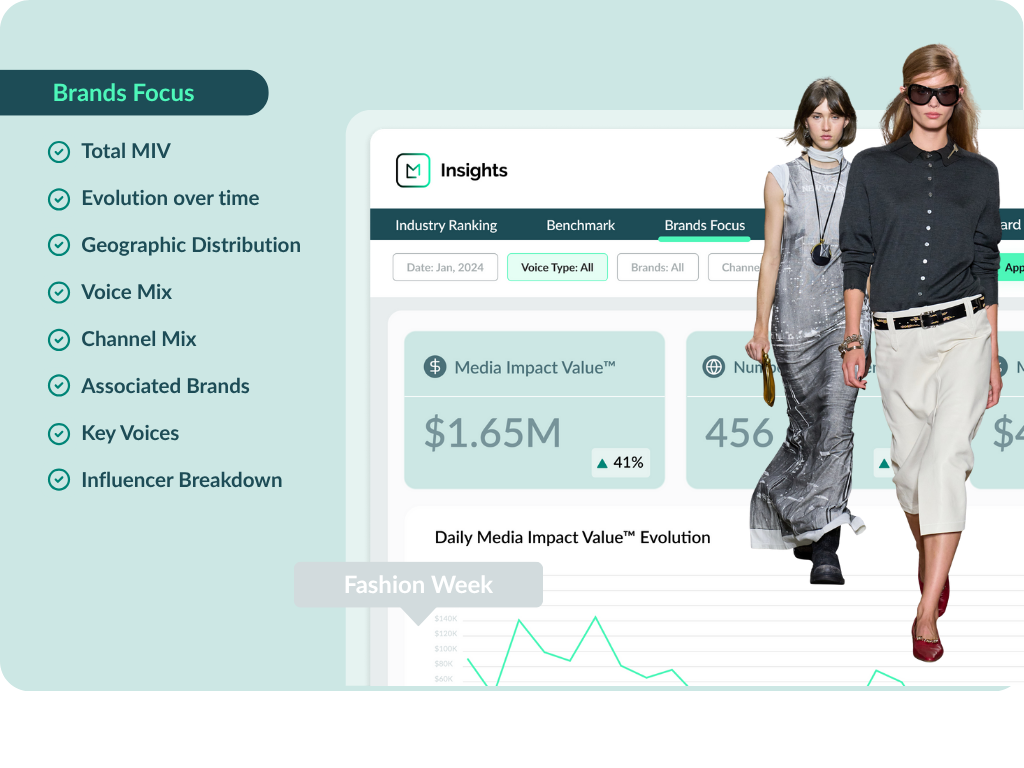
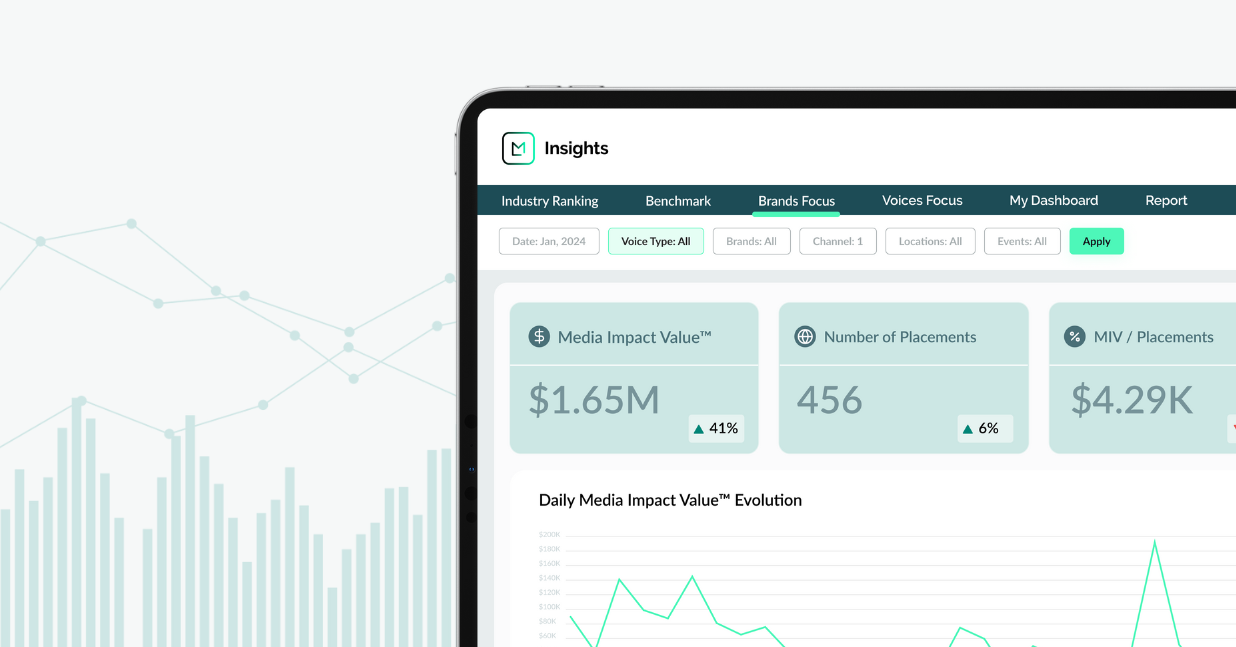
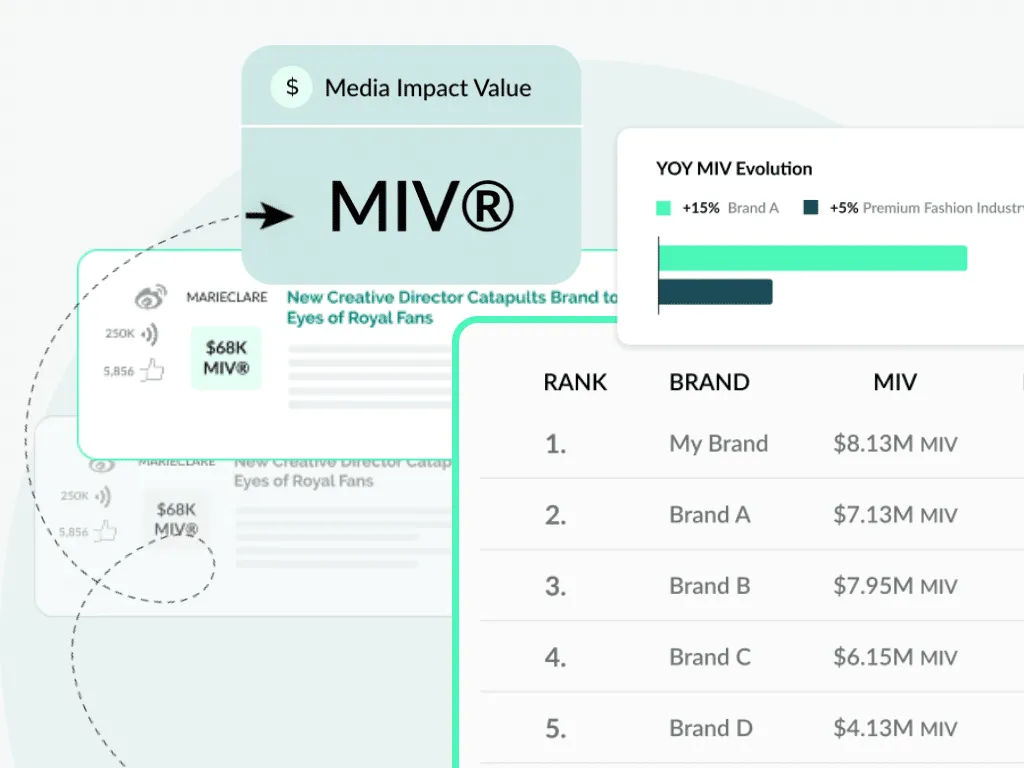
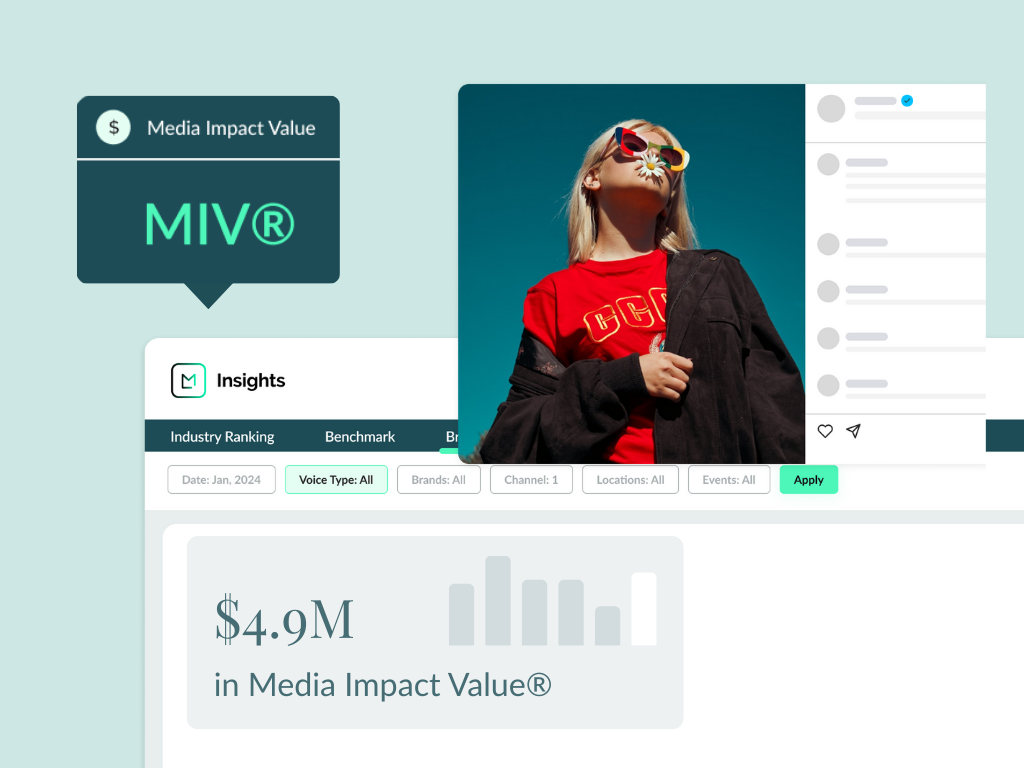
As the new industry standard across the Fashion, Lifestyle and Beauty industry, MIV assigns a monetary value to media mentions across regions, channels and Voices (Owned Media, Celebrity, Influencer, Media and Partner) to help brands quantify the impact of media exposure.
Instead of treating every impression the same, MIV weighs the factors that actually shape brand impact: the Voice behind the placement, the content format, the engagement it drives, the relevance of the market and the strength of the source or channel.
Different Voices carry different levels of relevance, which is why impact can’t be tied to audience size alone. Content resonates differently depending on who delivers it and the context in which it appears.
That’s the nuance MIV captures. It gives teams one clear way to understand the value behind each placement, making it possible to compare, for example, an influencer’s Instagram post with a key editorial feature and understand which truly made an impact. This enables PR and marketing teams to calculate and compare the ROI of placements.
Social Media Reach vs MIV: Balmain Case Study
Using Launchmetrics Insights, we looked at Balmain’s performance first two weeks of November 2025 to demonstrate what social media reach versus MIV reveals. Using the Brand Focus feature in the platform, we honed in on the top 30 placements for brands ranked by MIV.
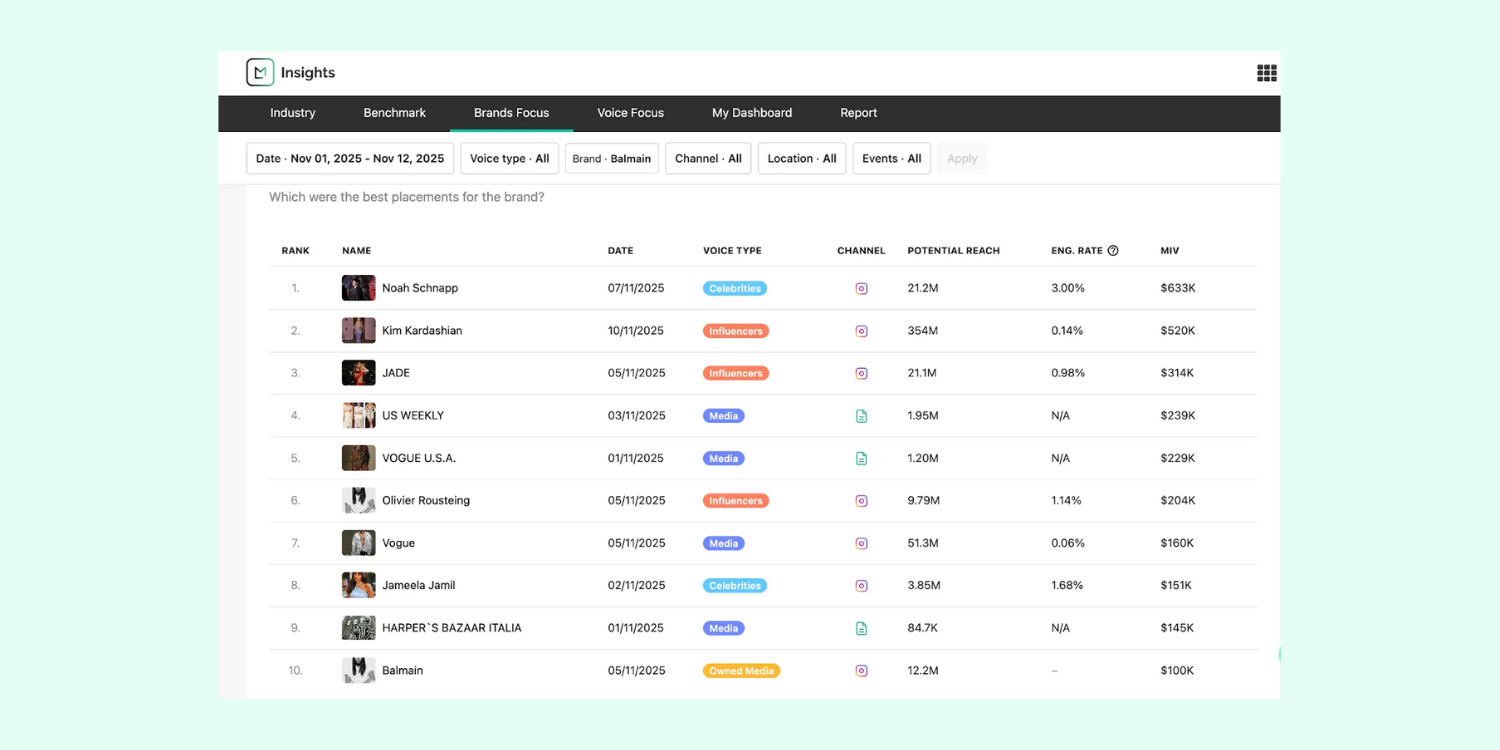
At first glance, Kim Kardashian’s post looks like a clear standout with a reach of 354M. It’s the kind of number that suggests the strongest brand impact, but once you look at the value it actually created, the post generated an impressive $520K in MIV.
Then there’s Noah Schnapp, whose post reached just 21M people yet delivered $633K in MIV. His content clearly resonated with an audience that was more aligned with the brand at that moment, which is the nuance reach can’t show.
On reach alone, the result seems inconsistent, but once you look at the impact each Voice created, it becomes completely logical.
MIV Gives Teams a Holistic View of Brand Performance
MIV sits within a wider measurement framework that gives marketing and PR teams a clearer view of how visibility is built across markets, channels and Voices. Combined with metrics like Voice Mix, Share of Voice and Brand Association, it helps teams understand who is driving impact and where opportunities sit.
- How visibility is built and who is actually driving it
- Which markets are overperforming or underperforming
- Which Voices justify continued investment
- Areas of opportunity to invest in—whether a regional strategy or a seasonal one
An example could be looking at MIV next to Voice Mix to learn which creators or outlets deliver the highest ROI. That insight shifts budgets, sharpens seeding strategies and strengthens future planning.
PR is Fighting for the Moments that Matter
We opened with a simple idea: visibility used to be easy to read, until social media reach made everything look bigger without necessarily making anything clearer. After walking through MIV to understand the real weight behind each placement, here’s what it comes down to: Reach tells you who stood in the room, while MIV tells you who listened, who cared and who acted.
This is where ROI comes into focus. MIV gives teams a unified way to quantify the value of every placement across Voices, Channels and Markets, so they can see which moments genuinely delivered impact. It turns visibility into something measurable and comparable, which is the kind of ROI marketing and PR teams rarely get from reach alone.
Once a brand sees that difference, it stops chasing the loudest number and instead focuses on building the strongest narrative with valuable metrics that actually moves the business.
If you want to build reporting that reflects that same clarity, our guide to the 10 essential KPIs that matter most will take you the rest of the way.
Get to Guide to the 10 Essential KPIs
Used by Fashion, Lifestyle and Beauty brands
Frequently ask questions
Reach is the number of unique people who had the chance to see a piece of content. Impressions count total views, including repeat views from the same person.
For marketing and PR teams, this distinction matters because impressions can look high even when the content isn’t expanding to new audiences and reach can look strong even when the impact remains low. Neither metric explains whether the content actually influenced the brand’s narrative or performance.
A social media reach calculator is a tool that estimates how many unique users your content could reach based on inputs like follower count, engagement rate and platform averages.
It’s helpful for quick forecasting, but it comes with limits as it cannot distinguish the quality of the audience, doesn’t account for relevance or Voice type, can’t predict real brand impact and assumes viewability, not influence.
This is why marketing and PR teams rely on metrics like MIV to understand the value and impact behind the visibility, not just how far it travelled.
By Pawandeep Kaur