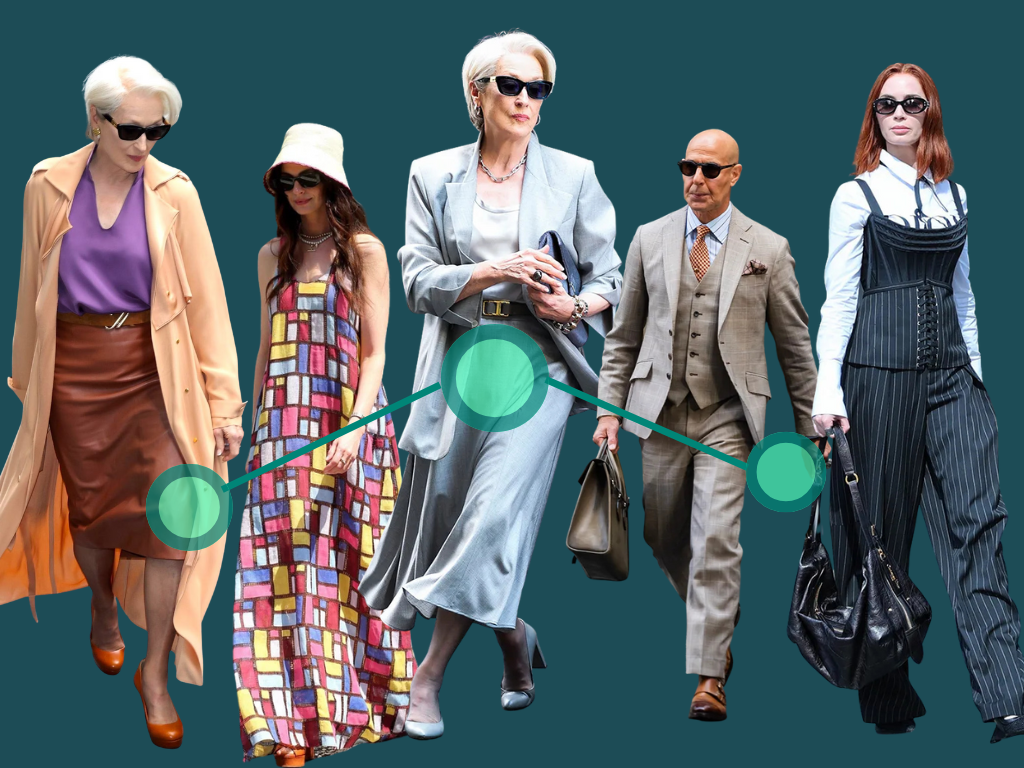
Nearly two decades after Meryl Streep’s portrayal of Miranda Priestly delivered the iconic cerulean blue speech, The Devil Wears Prada 2 is officially in production. Actors Anne Hathaway, Meryl Streep and Emily Blunt are all reprising their roles, with filming taking place across Manhattan this summer. The sequel, set for its May 2026 release, follows Miranda as she faces the decline of print media while competing against Emily Charlton (her former assistant and now powerful luxury executive) for advertising dollars.
But despite a captivating storyline, something else interesting is happening before the film premieres. Behind-the-scenes photos from NYC streets of the cast and their outfits are creating a media buzz, growing organic visibility for fashion brands such as Gabriela Hearst, Chanel and Jean Paul Gaultier featured in the sequel’s wardrobe.
Using our proprietary metric Media Impact Value® (MIV®), that assigns a dollar value to every mention across print, online and social, we tracked how these production moments generated $38.5M in total MIV as of today—a strategy that brands who want to leverage film exposure should take note of.
The Strategy Behind Sample Lending
When PR teams send pieces to stylists and production, the goal is usually to get them placed in the film. But The Devil Wears Prada 2 reveals how brands are thinking beyond just the official movie release and finding new ways to show up. Every street-style paparazzi shot from the sequel became a mini-campaign moment for brands, with media outlets extensively covering each costume change as production continues.
This strategy requires brands to be less rigid about how their pieces appear. Instead of controlling every styling moment, they’re allowing organic, candid appearances that feel authentic to fans. It taps into the audiences’ desire for behind-the-scenes access—similar to how Met Gala preparation content generates as much interest as the red carpet itself. Consumers want to feel like insiders and these production moments satisfy that curiosity while creating multiple opportunities for brand visibility. This strategy works because it transforms product placement from a single moment to an ongoing narrative.
To put the film’s buzz into perspective, Gabriela Hearst’s $1.35M in MIV from the paparazzi photos, represents 60% more impact than the brand generated from their FW25 Paris Fashion Week show, demonstrating how production-phase marketing can outperform traditional runway strategies.
While the behind-the-scenes photos have generated coverage across WWD, Vogue, Harper’s Bazaar and dozens of other outlets, social media channels are extending that reach further. TikTok users are analyzing Andy Sachs’ style evolution, comparing her 2025 wardrobe to her iconic transformation in the original film, Instagram fashion accounts are creating “shop the look” posts, while Youtube videos dissect styling decisions. Each street-style photo creates content across multiple platforms, turning single moments into overarching fan conversations.
The Data: Which Brands Are Maximizing Production Visibility?
While filming is still in its early stages, certain brands are already standing out in their ability to generate value from paparazzi photos. The below results are a reflection of how strategic positioning and smart sample lending decisions can maximize the visibility of each appearance. Let’s have a look at the top brands so far:
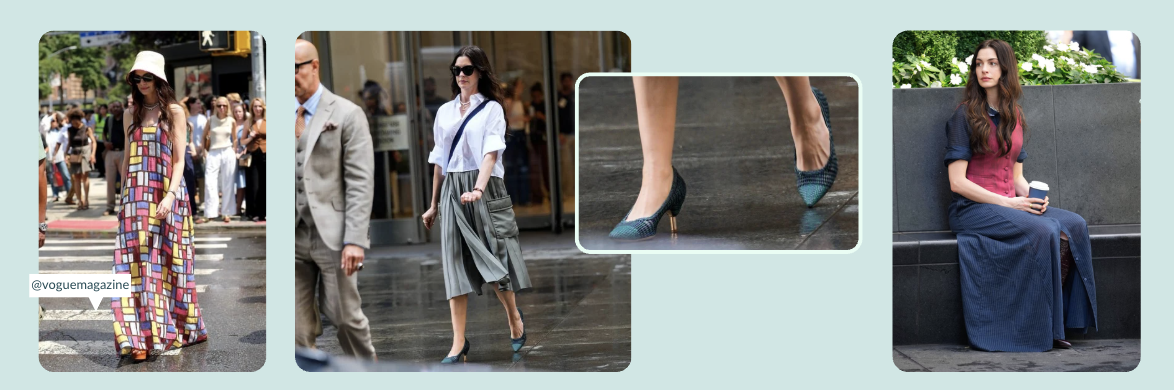
Gabriela Hearst – $1.35M in MIV
Currently, the brand has secured $1.35M in MIV through multiple placements. Anne Hathaway has been seen wearing the Coleridge vest in burgundy layered over a pinstriped midi dress and the Andres braided pumps. Additionally, the brand’s Niki Patchwork Maxi Dress created significant buzz when the actor wore it with a “Runway” garment bag, seemingly revealing (spoiler alert) Andy’s potential return to the magazine. Overall, Gabriela Hearst’s consistent presence across multiple costume changes shows how repeated visibility can grow MIV in behind-the-scenes buzz of the film.
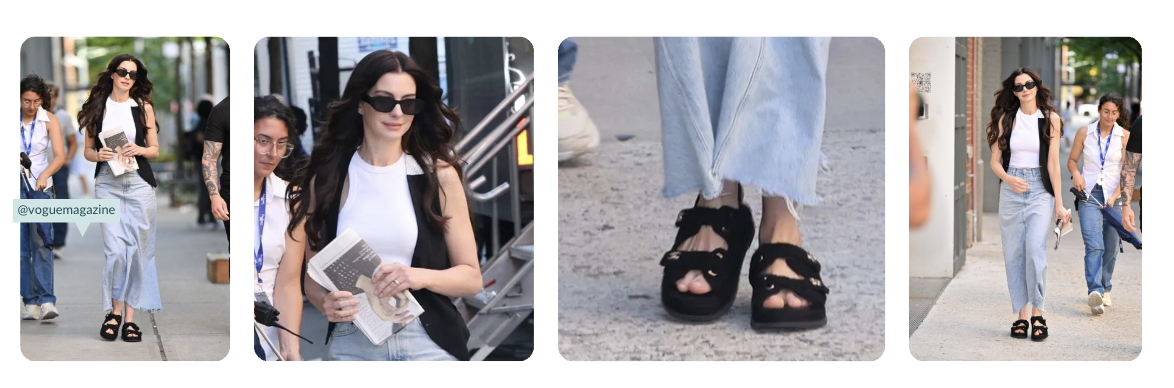
Chanel – $1.24M in MIV
The brand’s styling choices are generating buzz through a focus on rare or archival pieces, like Chanel’s Dad Slingbacks with Velcro closures from Virginie Viard’s 2022 lineup, becoming an immediate talking point, described as “Birkenstock-ish” on social media. The shoes demonstrate how past-season designs can create iconic moments and generate coverage across multiple platforms.
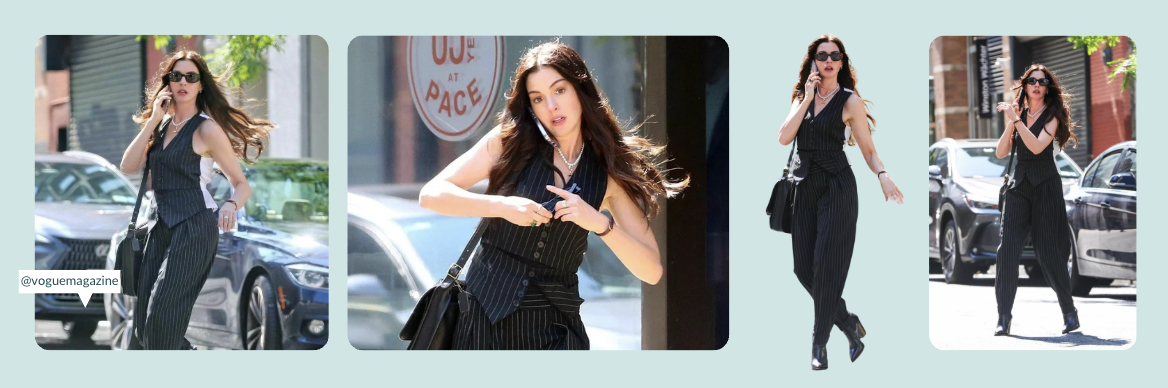
Jean Paul Gaultier – $1.06M in MIV
Anne Hathaway’s first major costume reveal featured a vintage 1990s pinstripe waistcoat and coordinated trousers from Jean Paul Gaultier Femme, paired with an archival Coach shoulder bag. The look bore a subtle resemblance to a similar striped ensemble Miranda Priestly famously wore in the first film, creating immediate fashion conversations and connecting the sequel’s aesthetic to the original’s iconic wardrobe.
These early standouts demonstrate how costume design—when strategically planned—can become a powerful brand visibility engine long before a film hits theaters.
What This Means for Brands: Leveraging Entertainment Through Smarter Sample Management
The Devil Wears Prada 2 reveals how entertainment partnerships are fundamentally shifting from event-only activations to wider strategies. Brands are no longer waiting for premieres or press tours, they’re embedding themselves into production workflows where authentic, unscripted moments generate consistent audience engagement.This approach aligns perfectly with fans’ appetite for early, behind-the-scenes content: eager to uncover storyline hints, analyze outfits and track character arcs long before the film’s release. That hunger creates a golden opportunity for brands to insert themselves into a cultural conversation that’s already happening, months ahead of the premiere.
But it’s important to note, this level of organic brand value isn’t easily replicable. The Devil Wears Prada 2 unique cultural position—a highly anticipated sequel to a beloved fashion film—created media attention that most productions can’t generate. However, the success does highlight opportunities for brands willing to invest in organic partnerships over controlled placements: instead of paying high rates for single red carpet appearances, brands can now secure months of visibility through street-style documentation and social media conversations.
Measuring What Matters: Turning Key Moments into Brand Impact
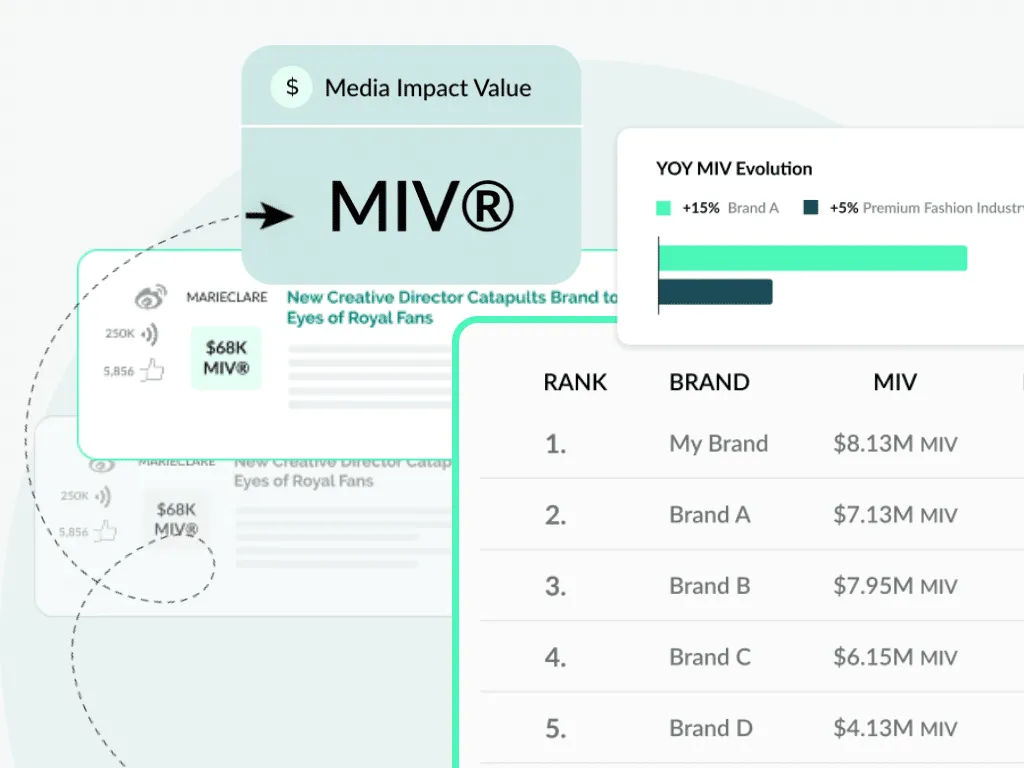
For brands considering entertainment partnerships, success today requires more than just hoping for coverage at the premiere. It’s all about tracking your brand’s visibility across the production timeline, from the moment a sample is sent out to the moment it shows up in a viral post. This is where metrics like MIV come in: enabling PR and marketing teams to measure the media impact of their sampling strategies.
Want to learn how to optimize moments like these? Download our MIV guide to understand how cultural moments translate into measurable brand impact.
Discover More About Media Impact Measurement for Fashion, Lifestyle and Beauty Brands
By Luna Weissman