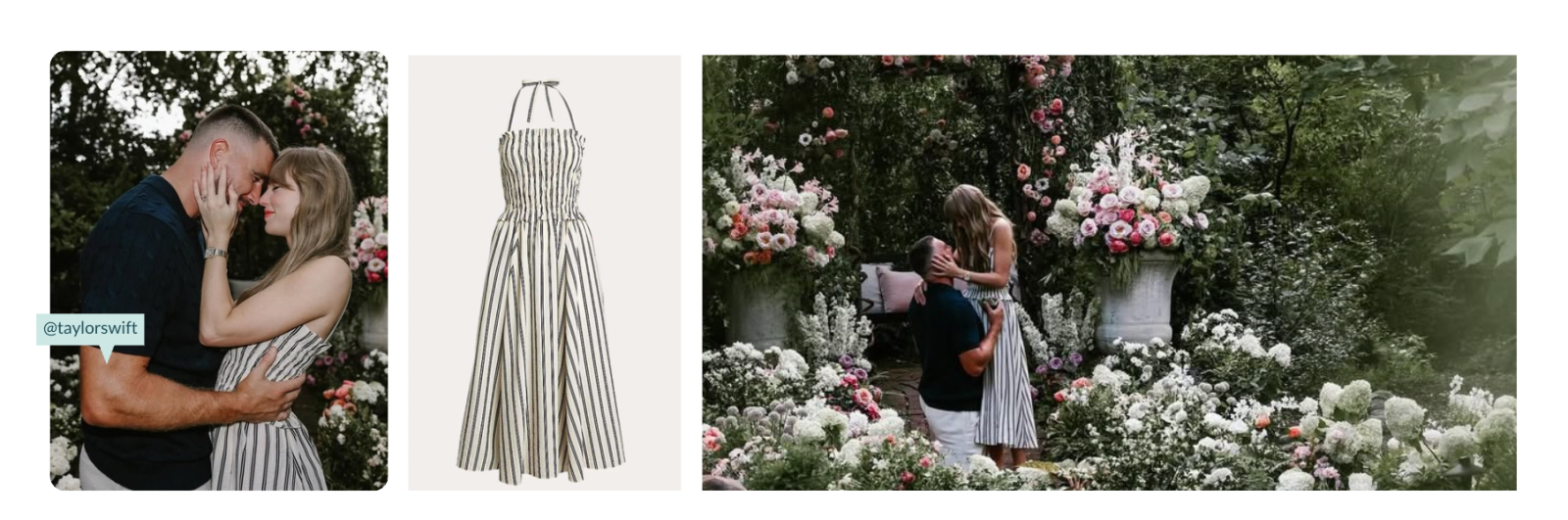
Two weeks ago in Lee’s Summit, Missouri, Travis Kelce got down on one knee in his home garden and proposed to pop icon Taylor Swift. She said yes—and the couple’s Instagram announcement made history with 28 million likes and over two million reshares.
Truth be told, fans have shown more excitement for this engagement than they typically would for a friend’s. As Claire Cohen, Vogue journalist put it: “Is it just me or is there something about Taylor Swift’s betrothal to NFL star Travis Kelce that feels a lot more personal than any other ‘extremely famous celebrity engaged to a less famous celebrity’?”
It stems from Swift’s gift for relatable storytelling throughout her music career: beginning with teenage heartbreak lyrics and evolving toward the ‘wild, romantic gesture’ she’d been writing about since adolescence. This very quality that fuels her music—the pull of emotion and relatability—has made her engagement announcement into a cultural milestone.
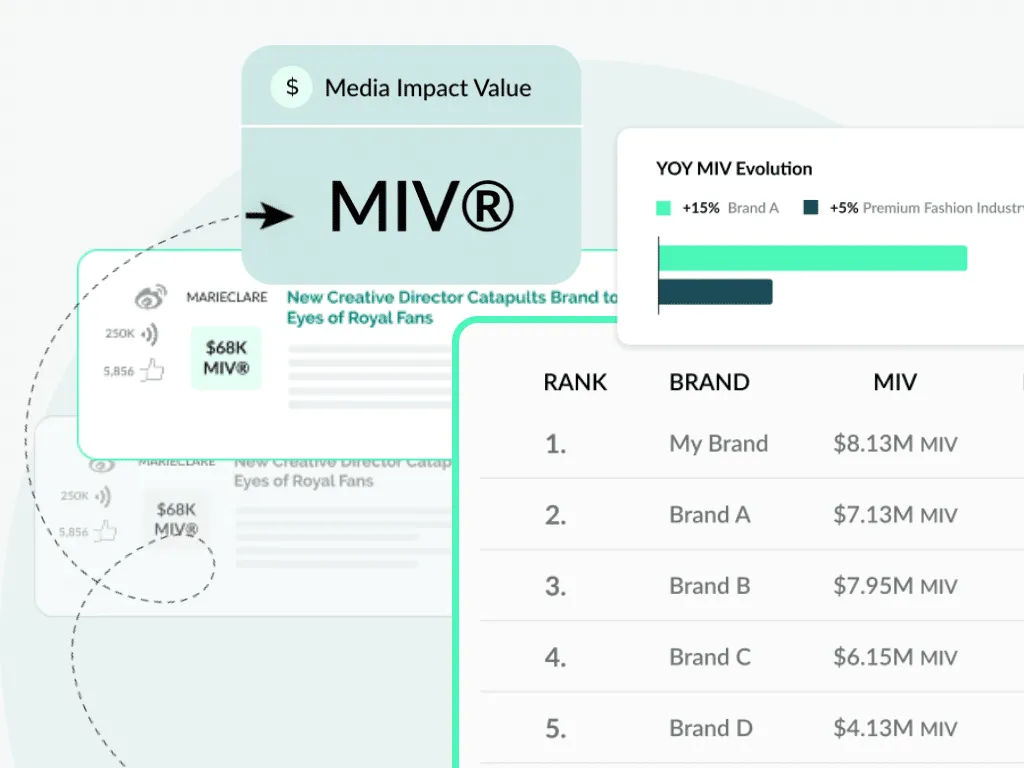
So, what does this viral engagement mean for the brands involved? In this blog, we explore the answers for marketers and PR professionals in the Fashion, Lifestyle and Beauty (FLB) industry using Media Impact Value® (MIV®): Launchmetrics’ proprietary metric that assigns monetary value to brand exposure across print, online and social channels. With that in mind, here’s how the engagement translated into brand impact.
The Numbers Behind the Taylor Swift’s Proposal
Travis’ father, Ed Kelce, revealed that the football player had proposed nearly two weeks before the public announcement. The couple coordinated their reveal with professional photos and Swift’s signature storytelling: “Your English teacher and your gym teacher are getting married”. Within an hour, 14 million people had liked the post.
Driving much of the buzz were the fashion choices which became instant talking points. Swift wore a black-and-white striped halter dress from Ralph Lauren, which garnered $5.8M in MIV for the brand. That one dress appearance also tripled Ralph Lauren’s MIV that day and accounted for 10% of the brand’s entire August impact within 48 hours.
Following this, Ralph Lauren’s website crashed as the $398 dress sold out instantly, with resale prices quickly climbing past $450. Jefferies analyst Ashley Helgans called this “mission success” for Ralph Lauren, a company that states it is not only in the clothing business but in the dreams business.
At the center of it all was the engagement ring, which generated $7M in MIV. The custom piece, designed by NYC-based jeweler Artifex Fine in collaboration with Kelce, quickly became viral with thousands of creators reviewing the design on TikTok.

Why Context Changes Everything
Taylor Swift has owned the spotlight at countless major events, yet her engagement resonated on a different level. The reactions spoke volumes: fans described feeling overwhelmed, calling it a historic moment—even self-proclaimed “mild Swifties” who’d never shown much interest before felt invested.
Part of the impact came down to timing. Just two weeks earlier, Swift had appeared on Travis Kelce’s New Heights podcast to announce her new album The Life of a Showgirl. Pairing that with the kickoff of football season meant the engagement landed at the perfect cultural crossroads, where music, sport and celebrities collided.
So how does this perfectly timed, emotionally charged moment compare to Swift’s other major appearances for brand value? Let’s have a look at how she generated MIV in other contexts to understand the scale of her viral engagement.
How Taylor Swift Creates Brand Value Across Contexts
The engagement represents the latest chapter in Taylor Swift’s pattern of generating brand value across different contexts.
Overall, her brand partnerships have consistently delivered strong results amongst Lorraine Schwartz ($538K), Saint Laurent ($488K), Givenchy ($318K) and Alaïa ($296K). This partnership momentum carried into the Eras Tour, a narrative she owns, where systematic collaborations generated $97.5M in just four months, including Atelier Versace ($6.3M) and Roberto Cavalli ($4.9M). To put that into perspective, Harry Styles’ Love on Tour generated $35M over nearly two years—impressive by any measure. Yet Swift achieved nearly triple that impact in a fraction of the time.
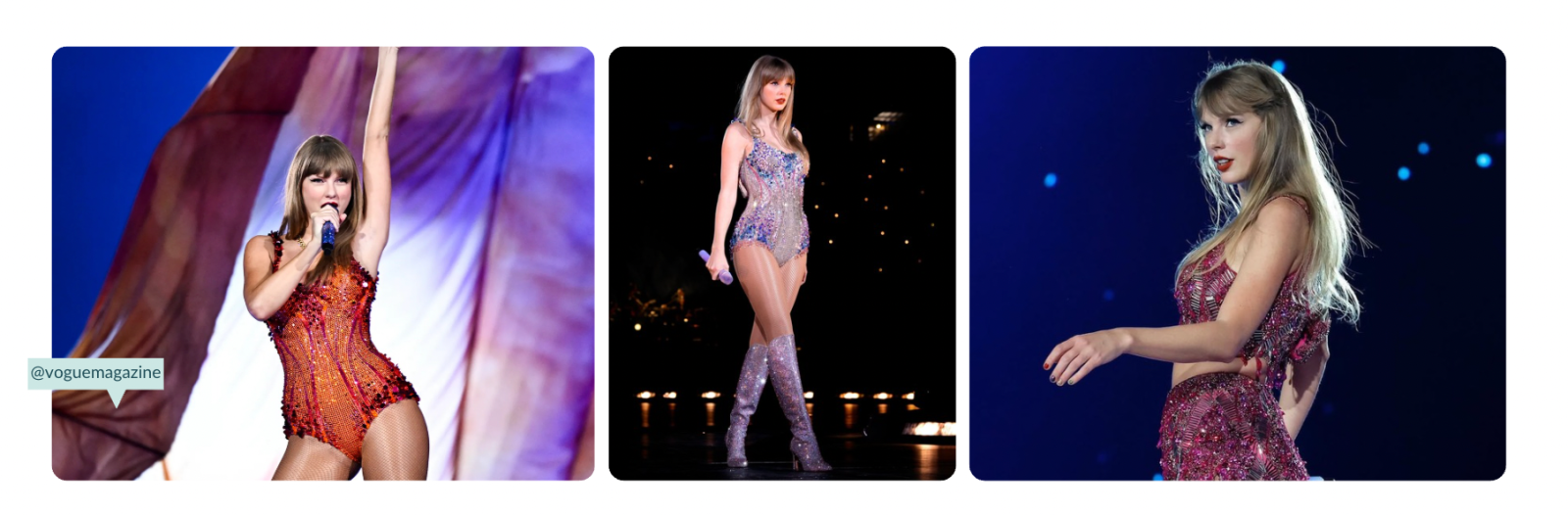
The pattern becomes clear: when Swift becomes part of broader stories, she generates substantial value. When she owns the entire narrative, she creates sustained impact.
Interestingly, her influence shines brightest when public appearances intersect with personal milestones. For instance, at Super Bowl 2025, millions tuned in hoping to catch glimpses of Swift supporting Kelce. She delivered, generating $76.9M in conversations while accounting for 11% of total event coverage. Still, that single $12.8M engagement post had outsized impact, highlighting the strength of a narrative anchored to her.
Taylor Swift’s influence is undeniable across contexts, but her engagement shows that nothing resonates more than authentic personal storytelling—the same kind of narrative her fans have been invested in since the very start of her career.
Beyond the Engagement: Strategic Brand Measurement
The lesson is clear for marketers: cultural relevance isn’t necessarily about being present at major events. It’s about identifying when your brand can become part of stories audiences are genuinely interested in. From $97.5M in sustained tour partnerships to $12.8M from a single engagement announcement, Swift proves that her own narratives and personal moments can deliver more impact than months of professional partnerships.
For brands seeking similar results, the approach lies in understanding which narratives your audience is already emotionally invested in and positioning your brand within those conversations at precisely the right moment.
Want to learn how to measure moments like these? Download our MIV guide to understand how cultural moments translate into measurable brand impact.
Discover More About Media Impact Measurement for Fashion, Lifestyle and Beauty Brands
By Luna Weissman